
Exo
Exo is a curiosity-driven exploration of generative AI tools, taking the form of an opening sequence for a hypothetical documentary. The subject was the visual territory where mineral formations and arthropod exoskeletons meet — surfaces that are dense, layered, and structurally complex in ways that conventional production rarely reaches.
Mineral matter was the starting subject — a visual world with its own internal logic: the opacity-to-translucency gradients, the intricate geometry, the particular way light refracts through them. From that study came a second insight: to inhabit this world with visually stunning creatures, the arthropods.
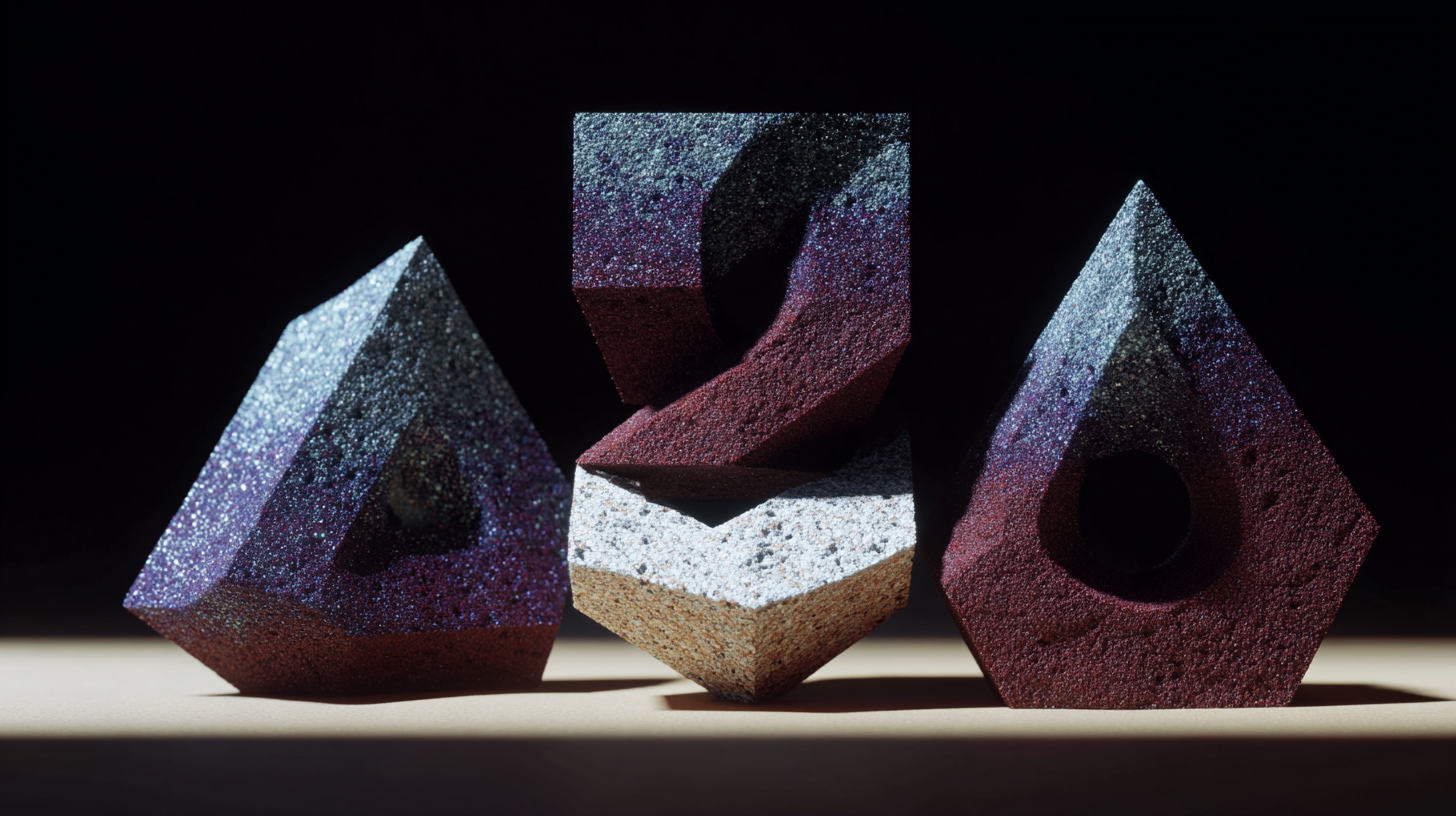
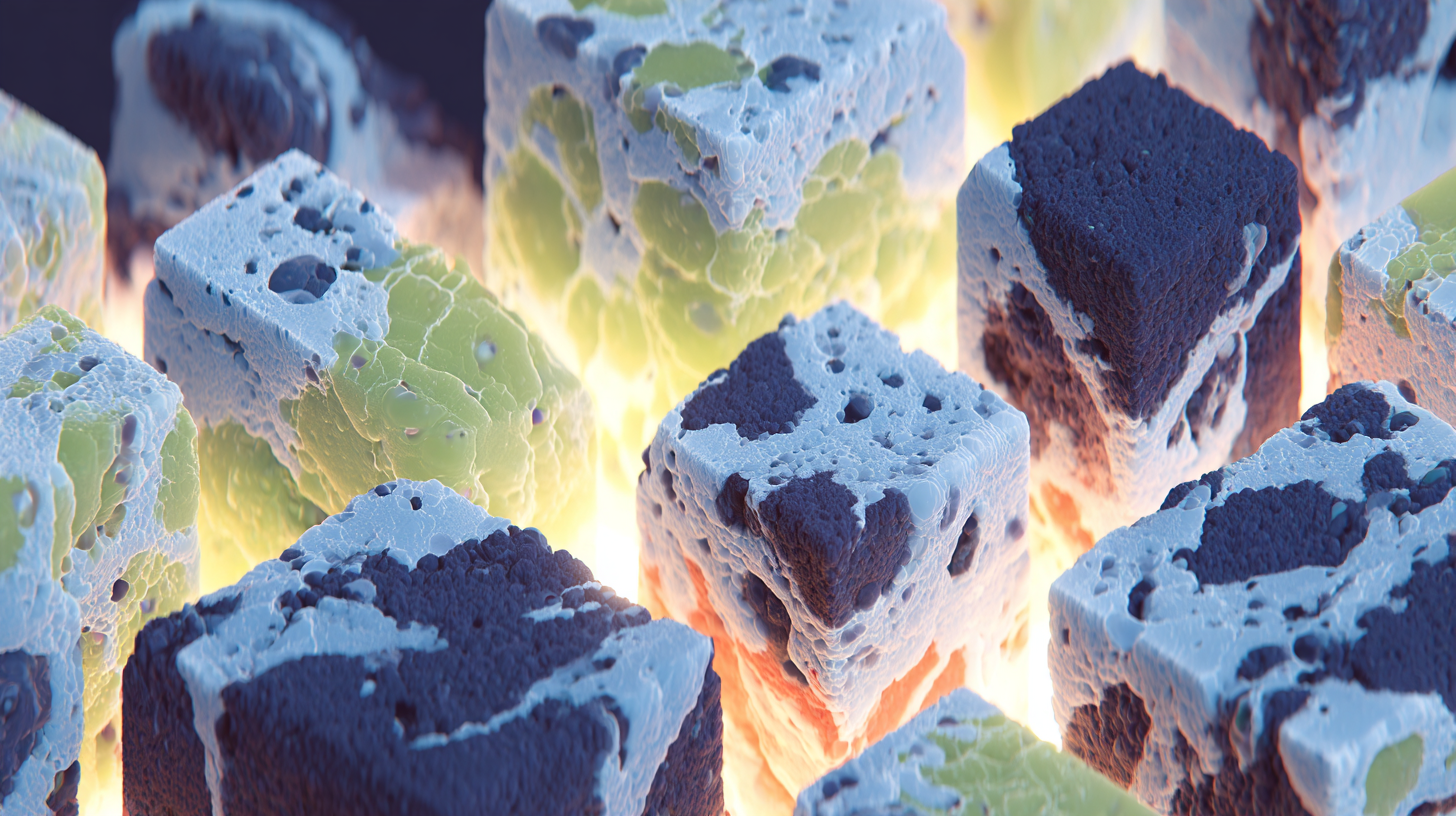



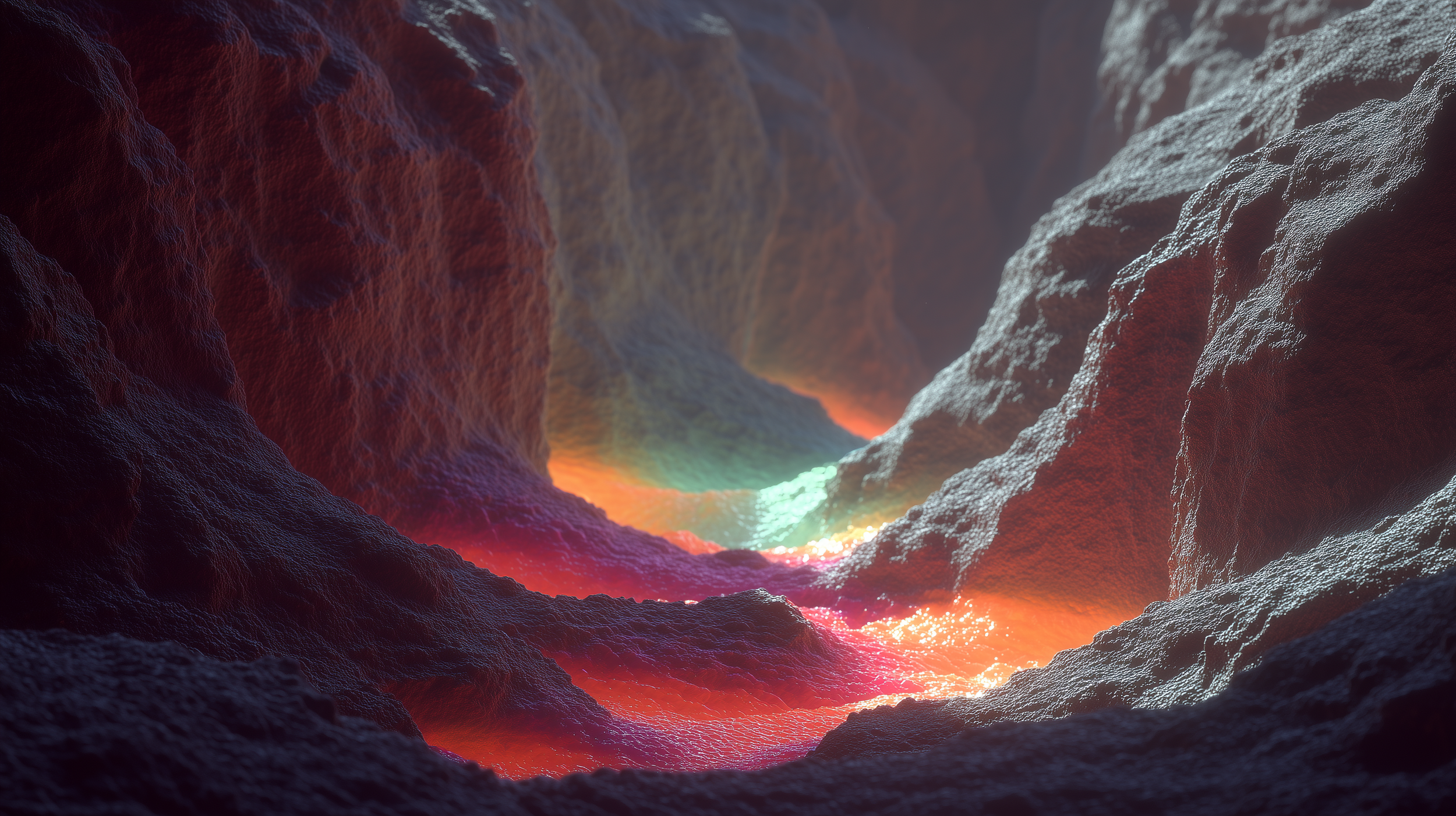







At a distance, an exoskeleton reads as an organic form — curved, continuous, alive. Up close, it's something else entirely: rigid, segmented, assembled from interlocking pieces with a precision that looks more engineered than grown.
Both realms are built from hard pieces fitted together, both surfaces interact with light through their material architecture, and the distance you need to tell them apart keeps getting smaller the more carefully you observe.

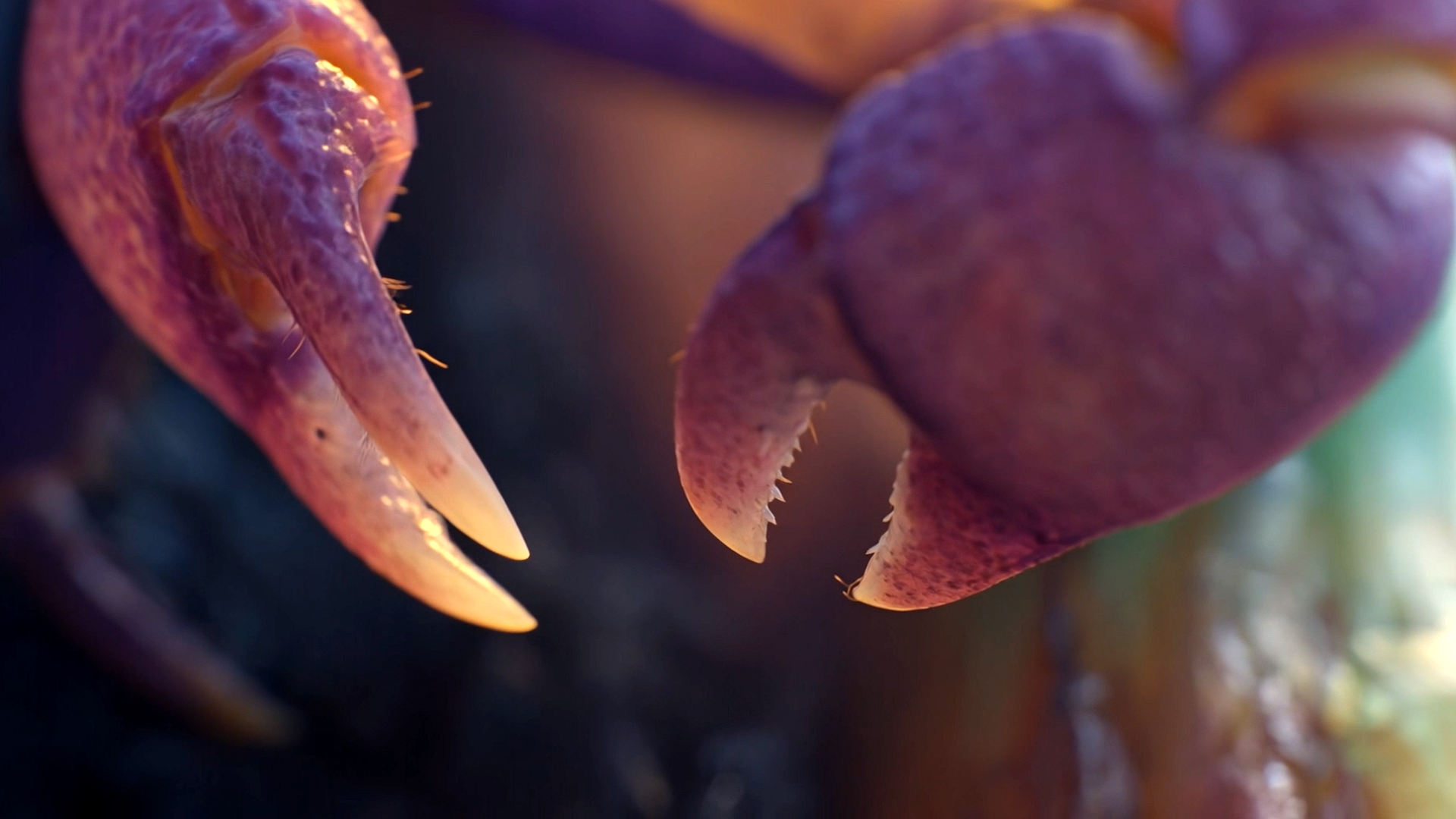
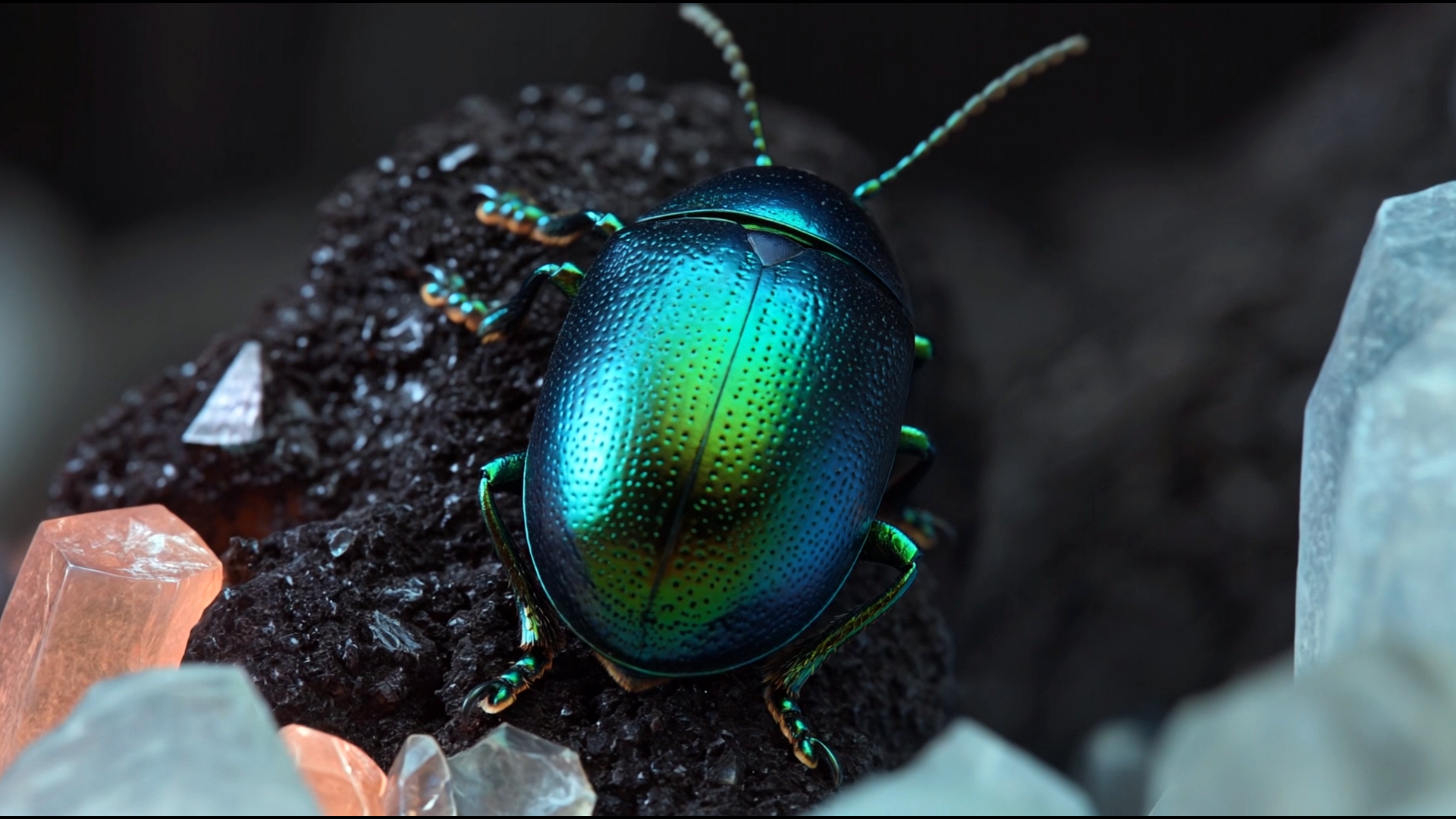
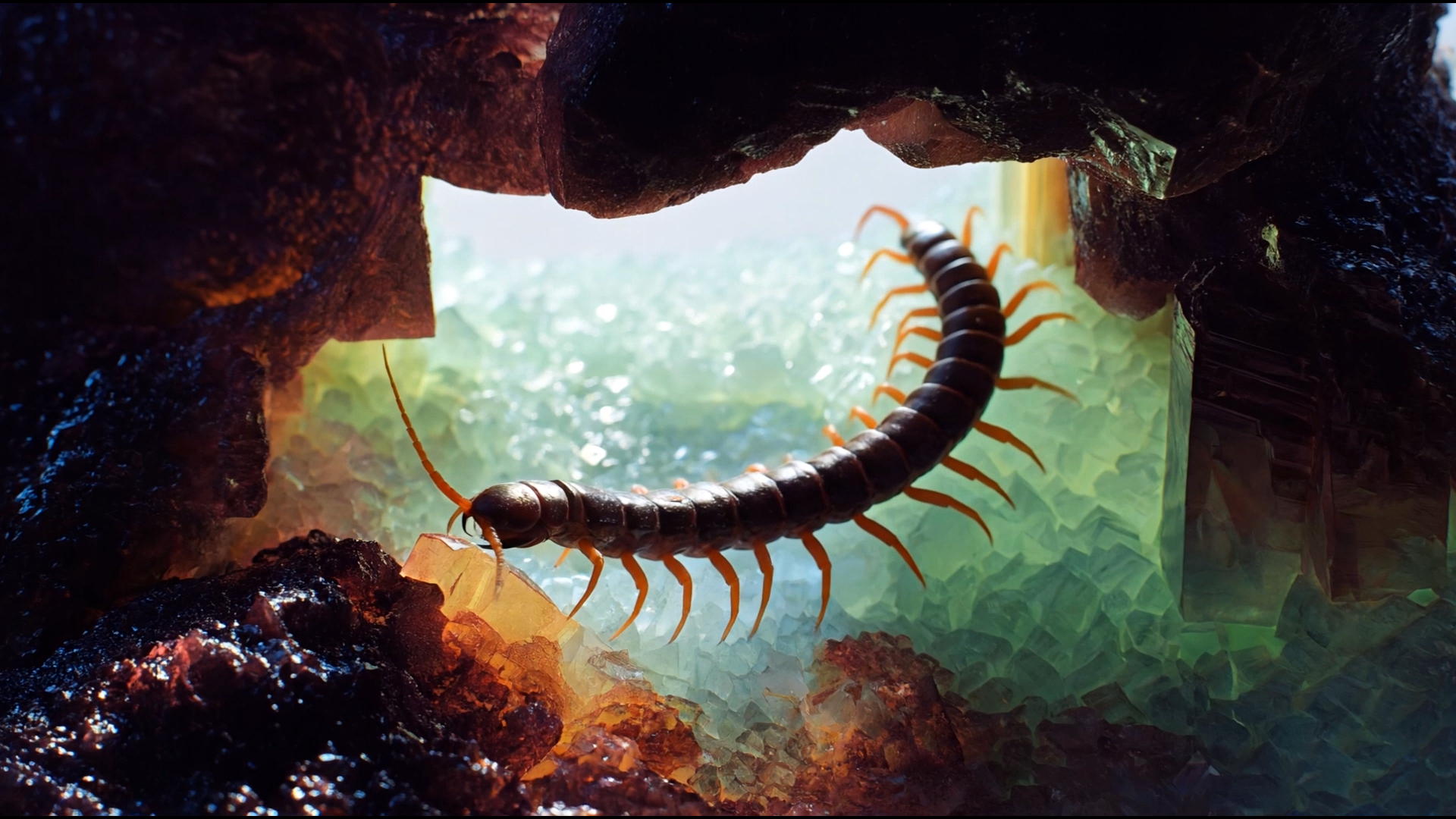
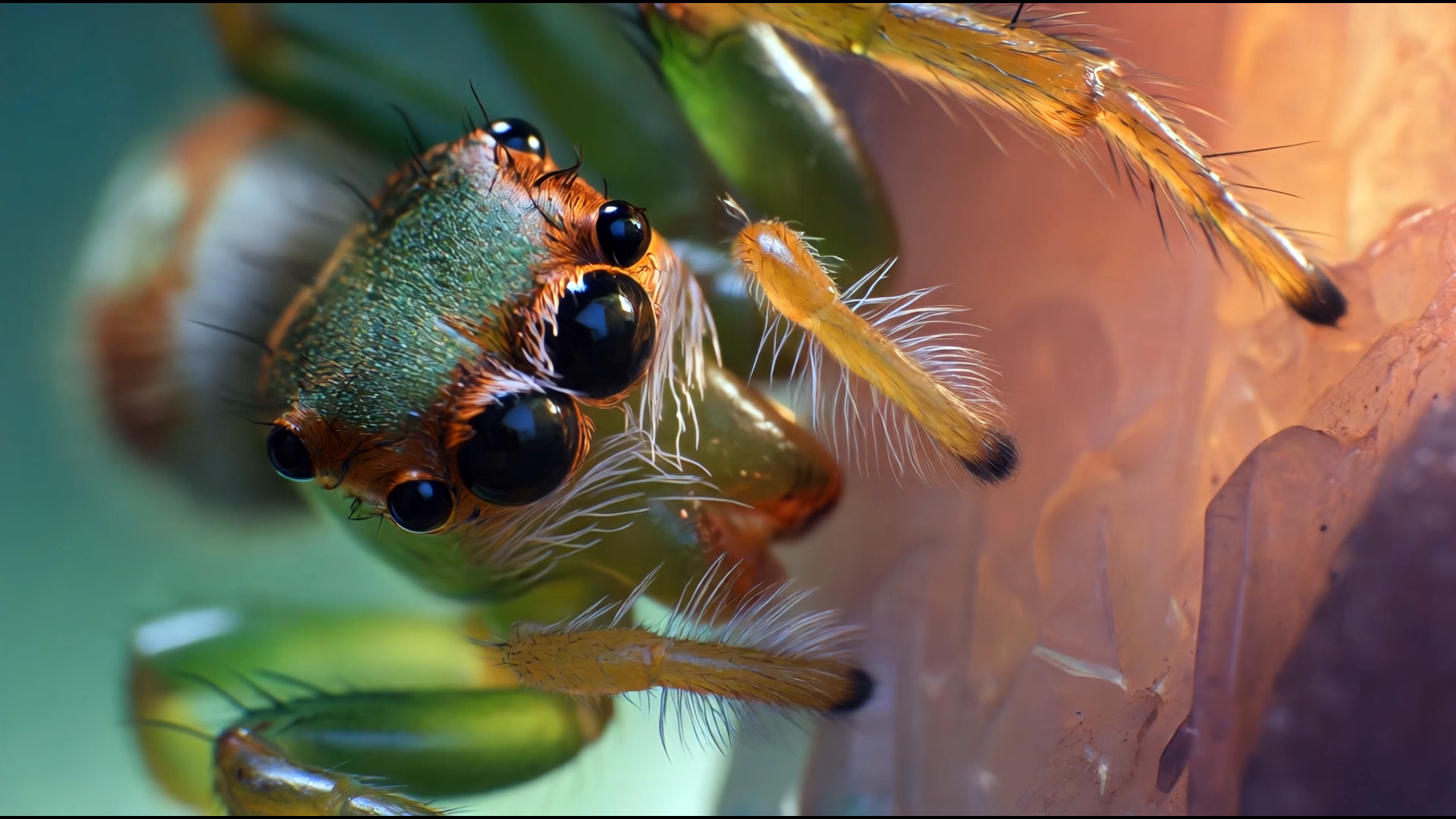
The mineral palette was fixed early: stones chosen for the specific way their interiors catch light. Several arthropod species followed, selected against those same criteria. From there, the process moved fluidly between premise and iteration—some directions were deliberate, while others surfaced unexpectedly.
Gen AI doesn't replace creative direction; it scales it. And that scaling fundamentally changes how work is done.
A single direction generates a hundred frames. A color choice branches into dozens of variations. A sonic idea produces thirty tracks before the right one emerges. This volume demands a new kind of creative mastery: not the ability to materialize a vision from scratch, but the ability to build that vision while navigating branches of possibilities.
For now, the generative process lacks the rigid control of a choreographed production—and that is exactly why it’s compelling. The real trade-off isn’t between intention and chaos; it’s between knowing exactly what you’ll get and staying open to something better that arrives uninvited.